Neurofeedback FAQs
What is neurofeedback?
It is classified as a general wellness approach and does not diagnose or treat medical or psychological conditions. Instead, neurofeedback supports the brain’s natural ability to regulate stress, attention, and overall nervous system balance.
Many individuals explore neurofeedback as a complementary option alongside therapy, medical care, or other wellness practices.
You can watch the short video below, where the author of Neurofeedback 101 explains the fundamentals of how neurofeedback works.
VIDEO: WHAT IS NEUROFEEDBACK
Which type of neurofeedback do you use?
NeurOptimal® provides real-time feedback about brain activity through gentle auditory cues. This process allows the brain to recognize and adjust its own patterns without being directed or forced into specific frequencies.
It is classified as a general wellness system and is designed to support overall nervous system balance, resilience, and flexibility.
NeurOptimal® has been used worldwide for over two decades, with millions of sessions completed.
How is NeurOptimal® different from other types of neurofeedback?
There are several types of neurofeedback systems available, including LENS and other clinician-guided approaches.
NeurOptimal® is known as a dynamical neurofeedback system. It does not target specific brainwave frequencies or attempt to “correct” particular patterns. Instead, it provides real-time feedback that allows the brain to observe and adjust itself naturally.
Some other systems use targeted protocols that focus on specific areas or frequencies of the brain and are typically administered by clinicians trained in those methods.
I chose to offer NeurOptimal® because I found it most helpful to me personally and because I value its gentle, non-directive, general wellness–focused approach.
If you are considering other types of neurofeedback, please speak directly with providers who are trained in those approaches.
You can watch the NeurOptimal® explainer video below to learn more about how it works.
VIDEO: NeurOptimal® Explainer Video
Do you use brain mapping (QEEG)?
NeurOptimal® is a dynamical neurofeedback system and does not require brain mapping or diagnosis before sessions begin. Rather than targeting specific brainwave patterns, it supports the brain’s natural ability to self-regulate through real-time feedback.
If you are curious about the differences between brain mapping and dynamical neurofeedback, you can read more in this article:
Understanding Brain Mapping and Neurofeedback
Is neurofeedback suitable for all ages?
Because it supports the brain’s natural ability to self-regulate, many individuals and families explore neurofeedback when experiencing challenges related to stress, attention, sleep, or emotional balance.
Neurofeedback is classified as a general wellness approach and does not diagnose or treat medical or psychological conditions. It may be used alongside therapy, educational support, or medical care when appropriate.
The video below highlights how neurofeeedback was instrumental in supporting Oregon adoptive families:
VIDEO: Supporting Families with NeurOptimal®
How many sessions will I need?
Neurofeedback is a training process rather than a one-time intervention. Many individuals begin with several sessions over the course of a few weeks to experience how their nervous system responds.
Some people choose short-term training for specific goals, while others continue longer to support ongoing stress regulation and resilience.
While individual experiences differ, many clients report subtle shifts in relaxation, sleep, or focus early in the process. Because consistency matters, I typically recommend starting with multiple sessions to get a clearer sense of how neurofeedback fits your needs.
If you are new to neurofeedback, you may begin with an initial intake and first session. After that visit, you can decide whether a package or rental option makes the most sense for you.
BOOK NOW
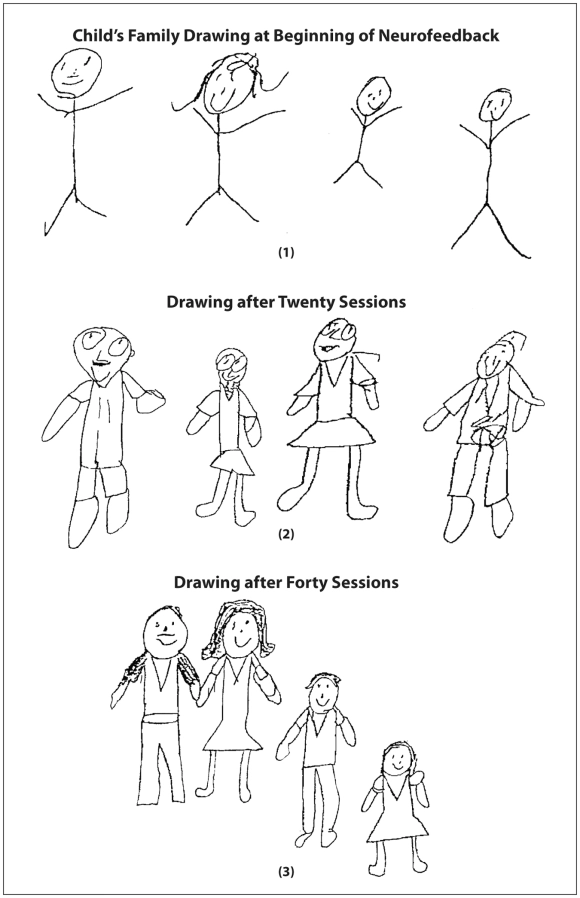
“After four months of neurofeedback, 10-year-old boy’s drawings of his family reflect increasing neurological development, developing sense of self.” – Sebern Fisher, from Neurofeedback in the Treatment of Developmental Trauma
What Are Your Rates?
1️⃣ In-Office Sessions (Most Common Starting Point)
Many local clients begin with in-office sessions to experience how neurofeedback feels and to determine whether it’s a good fit.
• $175 – Initial session
• $150 – Returning sessions
• Introductory packages available ($399 for 3 sessions)
This allows you to get started without a large commitment. Most clients will begin noticing benefits in the first 3 sessions.
2️⃣ At-Home Rental (popular for more frequent training)
Many of my clients choose to transition to a rental system for greater convenience and cost savings.
Training at home allows you to:
• Avoid travel time
• Schedule sessions more frequently
• Support multiple family members
• Continue progress more consistently
3️⃣ Own Your Own System (Long-Term Option)
For individuals and families who wish to train long term for ongoing maintenance, there is also an option to purchase your own NeurOptimal® system.
Owning a system can be a cost-effective investment over time and provides maximum flexibility.
I’m happy to help you explore which path makes the most sense during your initial appointment.
Does Insurance Cover Neurofeedback?
Most clients are able to use HSA or FSA funds to pay for in office sessions and for home rentals. Please check with your provider for eligibility.
If you’re curious but unsure, the 3-session starter package offers an opportunity to experience the process before making a longer-term commitment. From "Book Now" please select "Save with packages",
Other ways to save is to rent a system for home use. The rental cost per session can be as low (or lower) as your insurance co-pay!
What To Expect
What Happens in a Neurofeedback Session?
You (or your child) will then be placed in a quiet space and in a comfortable position. The trainer will attach special sensors to your head that will feed your brain wave patterns into the NeurOptimal® program’s software.
VIDEO: WHAT HAPPENS IN A SESSION
A neurofeedback training session is relaxing, enjoyable and typically lasts about 30 minutes. As the session starts, you will hear music play though headphones and perhaps watch relaxing geometric images gently morph across a computer screen. You will hear occasional “skips” or interruptions in the music – this is the signal that prompts your brain to “reset” and optimize itself. Instead of listening to the relaxing music, children may choose to watch a movie.
At the end of a session, clients often report feeling less stressed and more mentally clear. Many users experience deeper sleep and vivid dreams after their very first session.
If you are interested in trying this modality, take advantage of the new client specials and try a discounted mini-package of 3 sessions.
Is Neurofeedback Safe?
The training works by alerting your automatic functioning part of the brain to its own actions (this part controls the fear response, flight/flight/freeze, sleep, attentiveness, executive functioning, etc.) so it can ‘see’ its own maladaptive patterns.
Because the brain is designed to be responsive to new information, when the NeurOptimal Neurofeedback System alerts the brain to it’s own functioning the brain will naturally tweak itself to be the most efficient and effective response. It’s as if the brain, upon being alerted to it’s own behavior says “hey, I’m about to produce a stress response when I’m sitting in a safe space. That’s not efficient or an appropriate response. I’m going to change what I’m doing.”
How Long Does a Neurofeedback Session Last?
For parents bringing their children to neurofeedback I offer to split the very first session in half and allow the adult to try neurofeedback on themselves first. This allows children who might be a little nervous to see their parent enjoy the session before getting one themselves. My goal is to make you (and your child) as comfortable as possible.
If you have any special requests or need accommodations, please tell me!
Do The Effects of Neurofeedback Training Last?
Training with NeurOptimal® is actually a learning task. You get results because your brain is actively learning, even if you are not doing the learning consciously. So much like reading, once your brain knows how to read, it can’t “not know”. Your brain doesn’t forget. It may get rusty, but the effects of learning remain throughout your lifetime.
However, your brain is living tissue and you can— and will— get "knocked off" by stress, by chemicals, by alcohol, by an anesthetic, or by the difficult daily lives we all seem to live. The wonderful thing is, a few booster sessions will get you back to where you were. A "neurofeedback trained brain" is quickly able to utilize the information NeurOptimal® is offering. It's as if the brain says "I know what to do with this!" and it goes through all the steps it went through in the weeks of initial training, but very rapidly. So you quickly get back into your good place.
If you are going through a more difficult time, you can quickly do a session or two to recover your optimal flow and functioning.
Watch Our Video About the 3 Neurofeedback Options Available
Other
What is The Difference Between Biofeedback and Neurofeedback?
Neurofeedback, however, is a specific type of biofeedback that utilizes the power of the brain as the master controller of the whole body. Therefore, many people can achieve the same and even greater results by using neurofeedback rather than biofeedback equipment.